In many IT services companies, the real challenges are not technical. They are operational. Teams are busy, projects are moving, and dashboards are full, yet leadership still feels a lack of control. Goals are defined but missed. Project margins shrink quietly. Performance reviews create more doubt than motivation.
This was exactly the situation for a mid-sized IT services firm with around 200 employees working across office, remote, and hybrid environments. On paper, the company was growing. In reality, decision-making relied too heavily on spreadsheets, delayed reports, and subjective evaluations.
This case study explores how the company used AssessTEAM to clarify goals, increase visibility into project profitability, and improve fairness in performance reviews, ultimately changing how leaders and employees experienced work.
The Challenge: Growth Without Visibility
As the company scaled, alignment became harder to maintain. Teams worked on different priorities, and many employees struggled to see how their daily work connected to broader business goals. Quarterly objectives were documented but rarely revisited, leading to inconsistent execution.
Project profitability was another concern. Several projects regularly exceeded budget, but leadership only became aware once delivery was complete. At that stage, there was little opportunity to recover lost margins or correct inefficiencies.
Performance reviews added a third layer of frustration. Annual evaluations were mostly manager-driven, leaving employees uncertain about how decisions were made. High performers felt overlooked, while promotions sometimes appeared disconnected from actual results. Over time, this eroded trust and affected morale.
Leadership recognized that effort was not the issue. The real problem was the lack of real-time, shared insight across goals, projects, and people.
Solution: Introducing a Unified Performance Approach
The company implemented AssessTEAM with a simple objective: create a single system that connected goals, delivery, and performance feedback.
Rather than treating it as an HR-only platform, leadership positioned it as an operational tool for the entire organization. The rollout focused on three core areas: goal alignment, project profitability, and continuous feedback.
AI-Powered OKRs for Clear Alignment

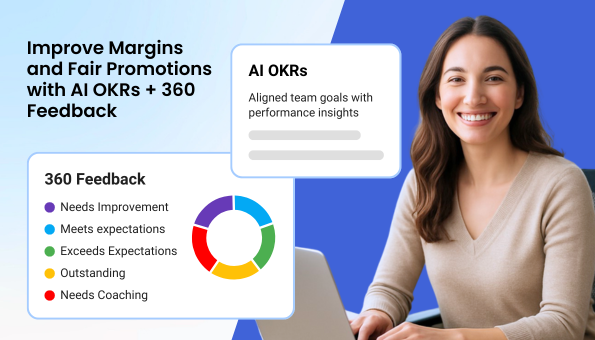
The first shift came with goal setting. Instead of static quarterly documents, teams began using AI-assisted OKRs within AssessTEAM. Leaders defined objectives, and the system helped generate measurable key results that aligned with real business outcomes.
This changed how goals were discussed. Progress was visible throughout the quarter, not reviewed only at the end. Teams knew what success looked like and where they stood at any given time. Managers reported fewer surprises and more meaningful weekly conversations focused on progress rather than explanations.
Within the first quarter, employees showed stronger ownership of goals simply because they could see them, track them, and understand how their work contributed to company priorities.
Real-Time Project Cost and Margin Tracking
While goals brought alignment, project tracking brought financial clarity. AssessTEAM connected time tracking with employee cost rates and project budgets. As teams logged hours, project costs updated automatically. Leadership no longer waited for end-of-month or end-of-project reports to understand margin health.
In one instance, a major client project showed early signs of cost overrun due to concentrated overtime in a single phase. Because the issue surfaced early, the project manager redistributed workload and adjusted timelines. The project ultimately closed within budget, something that had not been possible under the previous reporting model.
Over time, this proactive visibility significantly reduced margin leakage and allowed leadership to intervene while outcomes were still changeable.
360-Degree Feedback with Customer Input
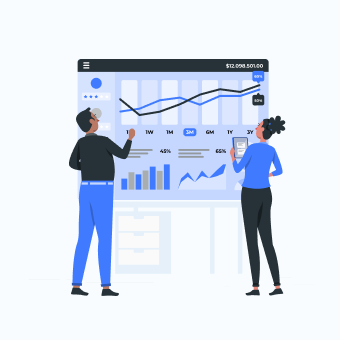 To address concerns around fairness and bias, the company introduced continuous 360-degree feedback. Instead of relying on a single manager’s view, employees received input from peers, supervisors, cross-functional collaborators, and, where relevant, customers. Feedback cycles were kept short and practical to encourage participation. As a result, engagement remained high, and managers gained a more complete understanding of individual performance.
This approach changed the tone of performance discussions. Conversations became more specific and constructive, focused on observable behavior and outcomes rather than perceptions. Employees reported greater confidence in the review process, knowing decisions were supported by multiple perspectives.
Customer feedback also played a role. Satisfaction scores and comments were linked to projects and teams, ensuring that service quality influenced performance evaluations in a meaningful way.
One Dashboard for Smarter Decisions

As goals, project data, and feedback flowed into a single dashboard, leadership gained a comprehensive view of the organization. They could see which goals were at risk, which projects required attention, and which employees consistently delivered strong results.
Leadership meetings became more efficient. Discussions were grounded in shared data rather than fragmented reports. When decisions were made about resourcing, promotions, or investments, the reasoning was clear and transparent.
Managers at all levels also benefited. Team leads could identify skill gaps early, support struggling employees sooner, and recognize high performers with confidence.
Results After 6 to 12 Months
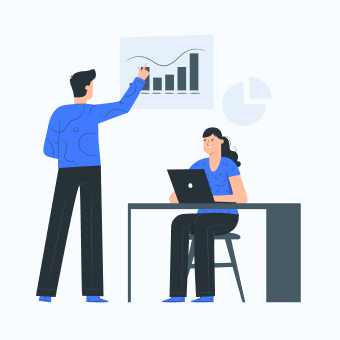 Within a year, the impact of the new approach was evident across the business. Project margins improved as risks were identified earlier and addressed proactively. Goal completion rates increased as teams stayed focused and aligned throughout the quarter. Employee engagement rose as performance reviews became fairer and more transparent. Turnover declined as employees gained trust in the evaluation process and saw clearer paths for growth. Customer satisfaction also improved, reflecting stronger delivery and more accountable teams.
The most significant change, however, was cultural. Decisions were no longer driven by assumptions or isolated opinions. Data created clarity, and clarity created confidence.
Conclusion
This case study demonstrates how connecting goals, project performance, and feedback can transform how an IT services company operates. By moving away from fragmented tools and subjective evaluations, the company gained real-time insight into both business performance and human performance.
For organizations navigating hybrid work, tight margins, and growing teams, performance management must extend beyond annual reviews. When goals are clear, profitability is visible, and feedback is fair, companies create an environment where both employees and the business can succeed.
AssessTEAM enabled this company to move from reactive management to informed decision-making, proving that clarity, not complexity, is the real driver of sustainable growth.