

Quick Summary
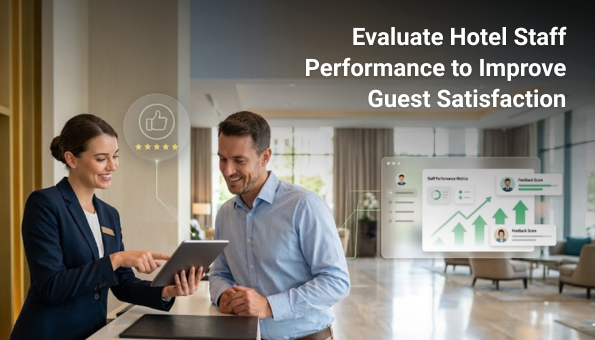
Hotel staff performance can be effectively evaluated to improve guest satisfaction through structured KPIs, real-time feedback, and 360-degree reviews powered by performance and employee engagement software. AssessTEAM helps hotels achieve this by enabling AI-driven performance evaluation for employees, aligning staff goals with guest experience metrics, and providing real-time insights that improve service quality, employee engagement, and overall guest satisfaction.
Modern organizations are increasingly turning to employee engagement and performance evaluation software to create a data-driven, real-time approach to employee performance evaluation. This shift allows hotel leaders to move beyond subjective reviews and build a culture of accountability, consistency, and continuous improvement.
Why Hotel Staff Performance Evaluation Matters More Than Ever

Hotel staff is the face of the brand. From front desk interactions to housekeeping and concierge services, every touchpoint influences guest perception. Without a structured evaluation system, performance gaps remain hidden, leading to inconsistent service delivery.
A well-designed performance evaluation framework ensures:
- Alignment between staff actions and guest satisfaction goals
- Consistent service standards across departments
- Early identification of training and development needs
- Improved employee engagement and retention
By leveraging performance evaluation software, hotels can track performance indicators in real time and make informed decisions that enhance guest experience.
Key Metrics to Evaluate Hotel Staff Performance

To improve guest satisfaction, performance evaluation must be tied directly to measurable outcomes. The most effective hotel groups evaluate both operational efficiency and behavioral competencies.
- done
Guest Satisfaction Scores (GSS): Direct feedback from guests via surveys and reviews
- done
Response Time Metrics: Speed of service in areas like front desk, housekeeping, and room service
- done
Service Personalization: Ability to recognize repeat guests and tailor experiences
- done
Upselling Effectiveness: Contribution to revenue through upgrades and add-ons
- done
Complaint Resolution Rate: Efficiency and quality of issue handling
- done
Adherence to SOPs: Consistency in following brand standardsc
By aligning these KPIs with a structured employee performance evaluation, hotels can directly link staff performance to business outcomes such as RevPAR, occupancy rates, and guest retention.
Building a Continuous Evaluation Framework

Traditional annual reviews are no longer sufficient in a fast-paced hospitality environment. Leading hotels are adopting continuous performance management models powered by performance evaluation software. This approach allows managers to capture real-time feedback, track performance trends, and provide immediate coaching. For example, if a front desk associate receives repeated feedback about slow check-ins, managers can intervene instantly rather than waiting for a quarterly review.
Additionally, continuous evaluation helps identify high performers early, enabling leadership to reward and retain top talent, critical in an industry known for high turnover.
Leveraging 360-Degree Feedback for Holistic Insights

Hotel operations are highly interconnected. A guest’s experience is influenced by multiple departments working together. That’s why 360-degree feedback is essential.
Using employee engagement software, hotels can collect feedback from:
- done
Supervisors (top-down evaluation)
- done
Peers (cross-functional collaboration insights)
- done
Subordinates (leadership effectiveness)
- done
Guests (external validation of service quality)
This multi-dimensional approach provides a more accurate picture of performance and uncovers blind spots that traditional evaluations often miss.
Aligning Employee Goals with Guest Satisfaction Outcomes

One of the biggest gaps in hotel performance management is the disconnect between employee goals and guest satisfaction metrics. High-performing organizations ensure that every employee understands how their role impacts the guest experience.
With modern AI goal-setting software, goals can be dynamically aligned with:
- done
Guest satisfaction targets
- done
Service quality benchmarks
- done
Departmental KPIs
- done
Revenue objectives
This alignment creates accountability and ensures that employees are not just completing tasks but contributing to strategic outcomes.
Driving Engagement to Improve Performance

Performance and engagement go hand in hand. Disengaged employees are less likely to deliver exceptional service, regardless of training or SOPs.
By integrating employee engagement software, hotels can:
- done
Capture real-time employee sentiment
- done
Identify burnout or dissatisfaction early
- done
Encourage continuous feedback and recognition
- done
Foster a culture of accountability and motivation
Engaged employees are more proactive, attentive, and committed to delivering memorable guest experiences, directly impacting satisfaction scores.
Best Practices for Evaluating Hotel Staff Effectively

To maximize the impact of your evaluation strategy, consider the following:
- done
Standardize KPIs across properties while allowing flexibility for local nuances
- done
Incorporate real-time feedback mechanisms instead of relying solely on periodic reviews
- done
Use role-specific performance indicators for different departments
- done
Train managers on objective evaluation techniques to reduce bias
- done
Integrate evaluation with training and development programs
A structured, technology-driven approach ensures consistency, scalability, and measurable improvements in guest satisfaction.
FAQs
1. What is the best way to evaluate hotel staff performance?
The best approach combines clear KPIs, continuous feedback, and 360-degree evaluations, supported by performance evaluation software – AssessTEAM, which provides real-time insights and structured performance tracking.
2. How does employee engagement impact guest satisfaction?
Engaged employees are more motivated, responsive, and customer-focused. With AssessTEAM, the employee engagement software, organizations can measure and improve engagement levels, directly enhancing guest satisfaction.
3. Why should hotels use performance evaluation software?
AssessTEAM, the performance evaluation software, provides data-driven insights, automates KPI tracking, and ensures consistent, objective evaluation of employee performance across departments.
4. What metrics should hotels track for performance evaluation?
Hotels should track guest satisfaction scores, response time, service quality, employee engagement, and revenue contribution. AssessTEAM helps monitor all these metrics in real time through customizable dashboards and reports.
5. How often should hotel staff be evaluated?
Continuous evaluation is more effective than annual reviews. With AssessTEAM, managers can provide real-time feedback and regularly monitor performance, ensuring consistent
Conclusion
To improve guest satisfaction, hotels must adopt continuous, data-driven performance evaluation for employees rather than relying on periodic reviews. With AssessTEAM, hospitality leaders can implement AI-powered performance evaluation software and employee engagement software to track performance in real time, close service gaps quickly, and build highly engaged teams that consistently deliver exceptional guest experiences.