
OKR Goal Setting Software
Set smarter goals with AI-powered OKRs. Align teams, assign key results, and track performance in real time across your organization.
Set smarter goals with AI-powered OKRs. Align teams, assign key results, and track performance in real time across your organization.
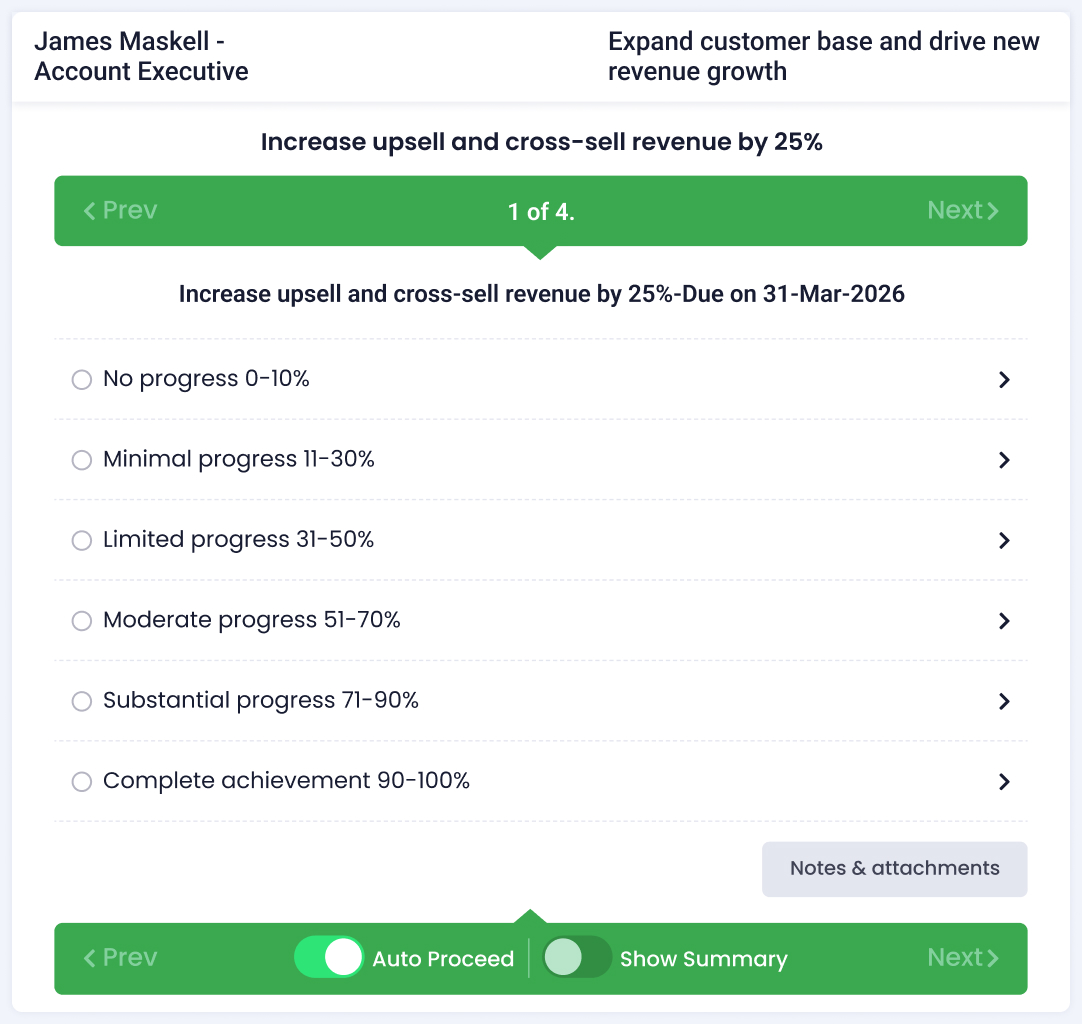
Successful OKR implementation has three components – Alignment, Measurement, and Tracking.
AssessTEAM helps organizations:
This ensures employees stay focused on what matters most.
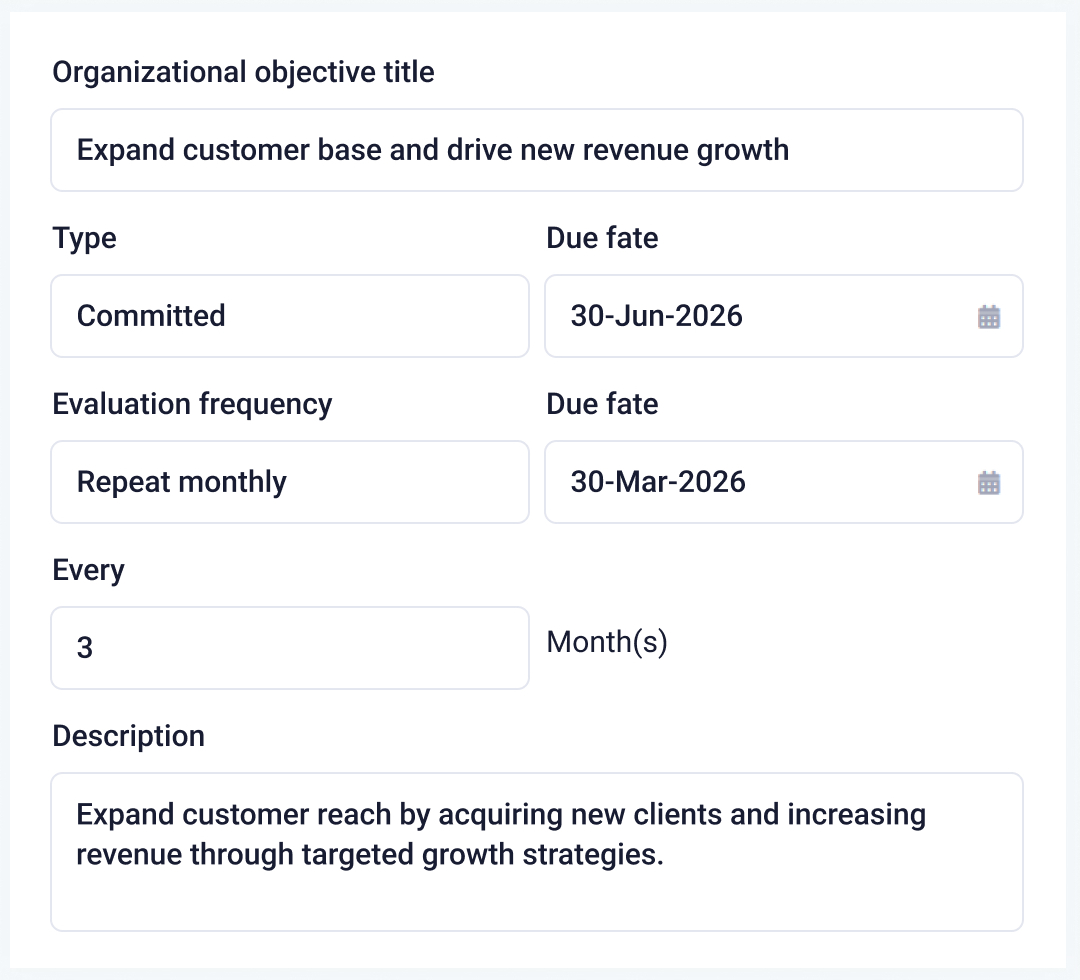
Every organization uses OKRs differently. Some set quarterly objectives while others use monthly or annual goal cycles.
AssessTEAM supports flexible OKR workflows including:
This flexibility allows organizations to adopt OKRs without changing existing management processes.
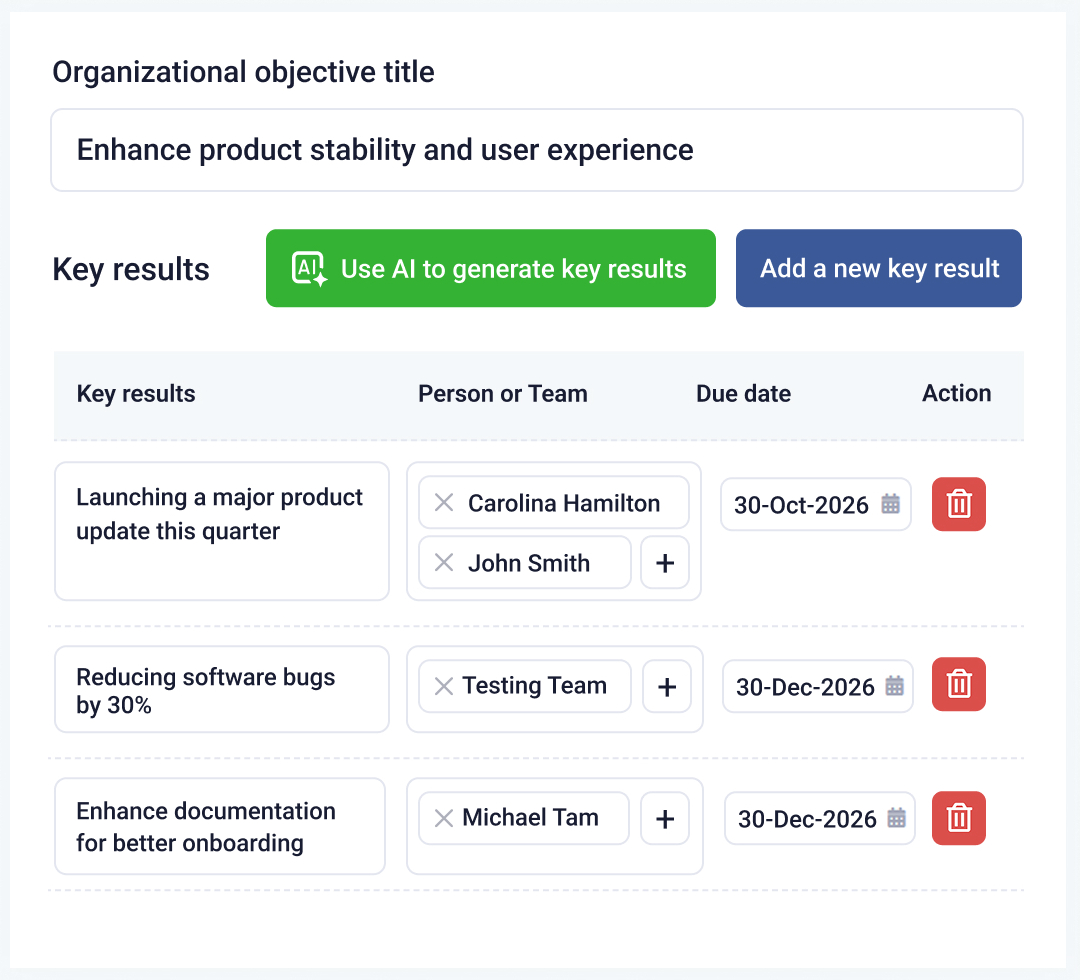
Writing effective OKRs can be challenging. AssessTEAM simplifies this process with AI-assisted goal creation.
Managers can:
This helps organizations create meaningful OKRs in minutes.
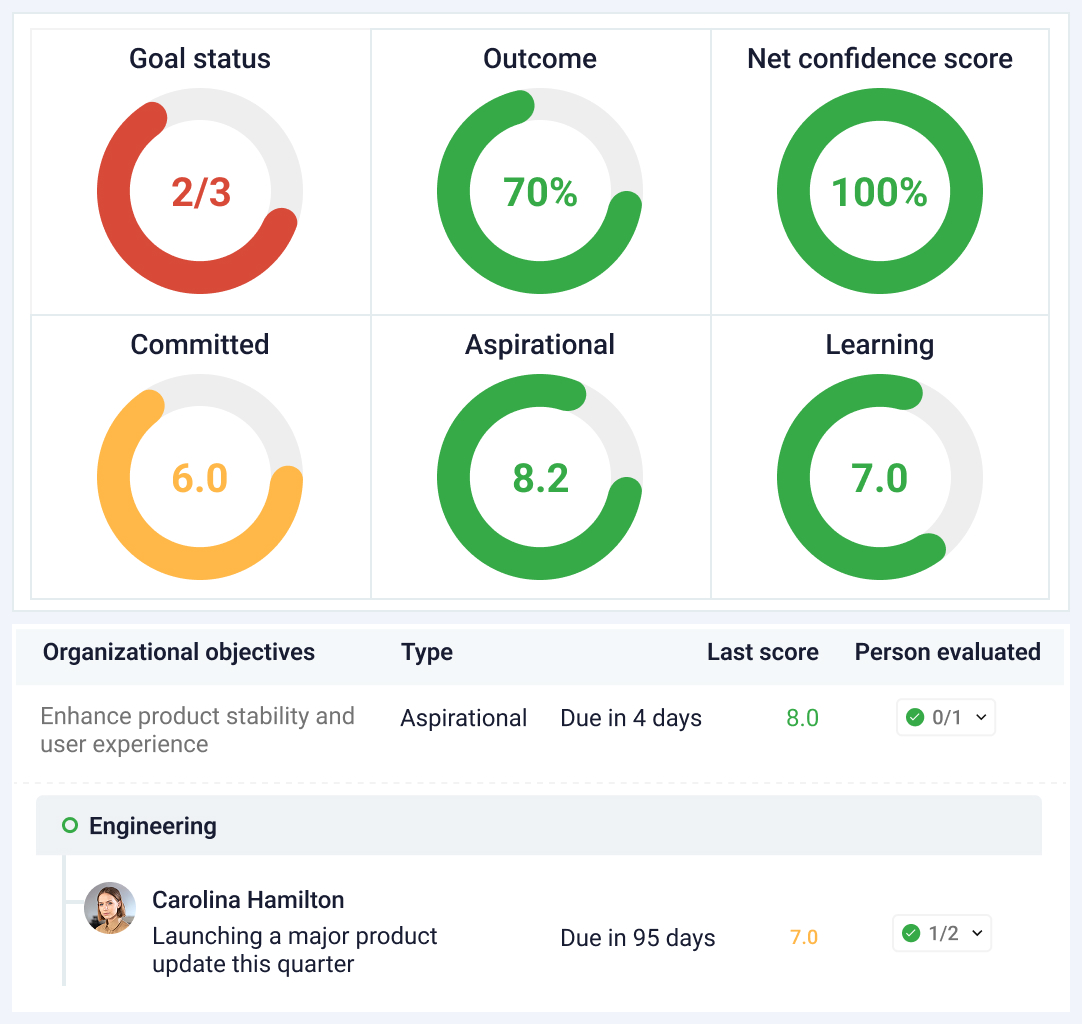
AssessTEAM provides dashboards that track:
Managers can quickly identify risks and make adjustments before goals fall behind schedule.

Organizations often struggle with maintaining visibility into progress toward goals.
AssessTEAM ensures timely feedback by enabling:
These inputs create a continuous flow of data that helps leadership understand how the organization is performing.
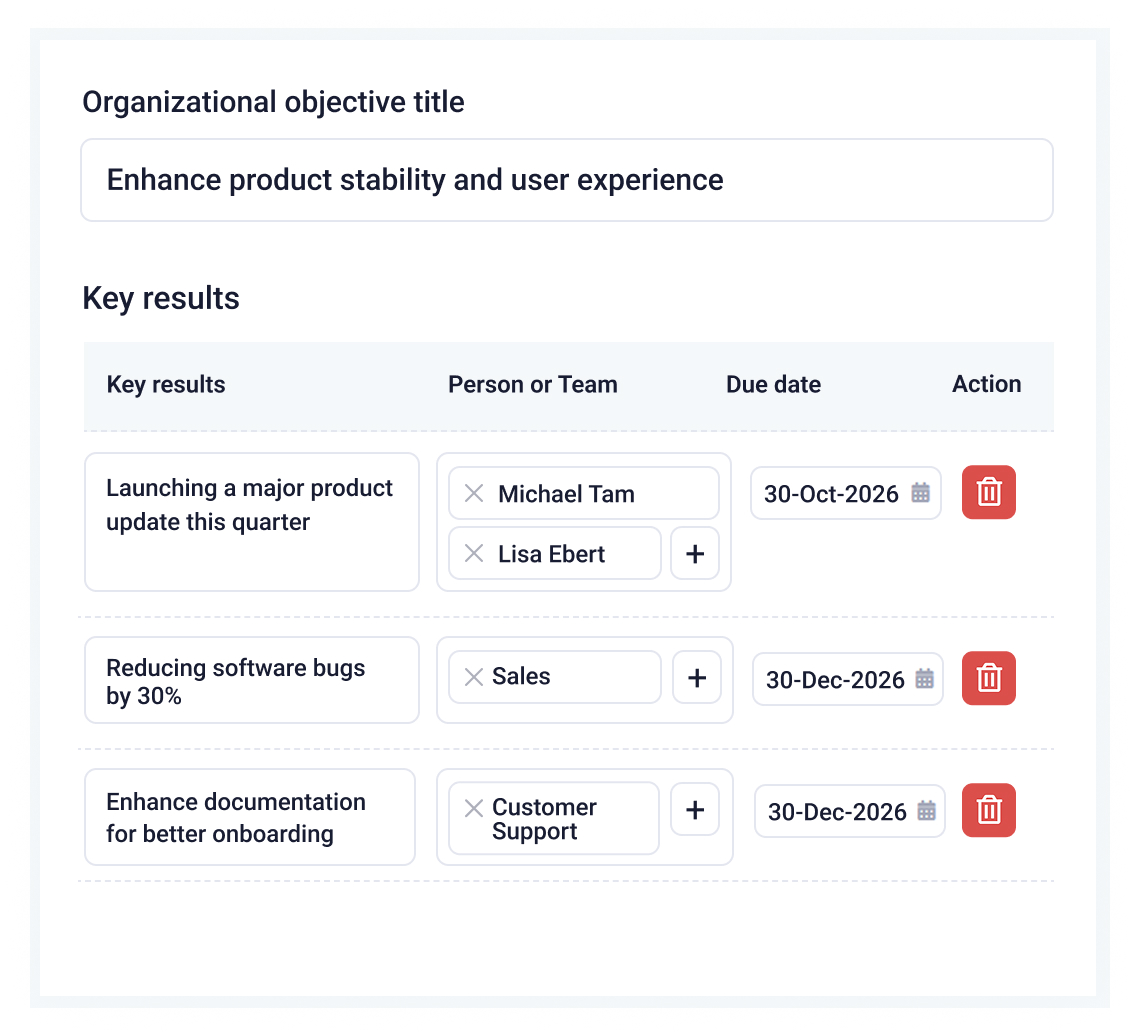
OKRs can be evaluated using structured feedback from managers, employees, peers, and project stakeholders. This ensures key results are measured objectively and progress is clearly documented.
Example organizational objective: Improve customer communication
Key results:
Each key result can be assigned to individuals or teams and evaluated over time.
OKRs (Objectives and Key Results) are a goal-setting framework used to align teams around measurable outcomes.
KPIs measure ongoing performance metrics, while OKRs define specific goals and measurable results for a defined time period.
Yes. AssessTEAM enables objectives and key results to be assigned to individuals or teams.
Yes. AssessTEAM enables managers to evaluate key results using structured feedback.