

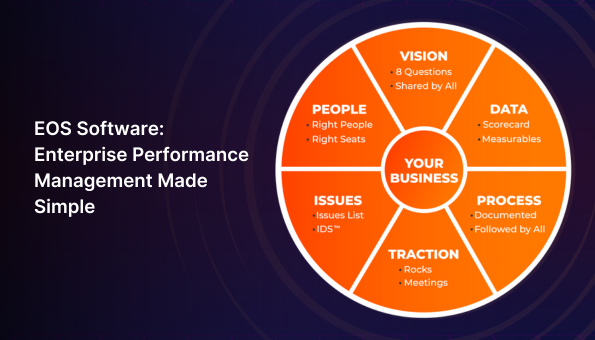
The Entrepreneurial Operating System (EOS) is transforming businesses worldwide, from agile startups to established enterprises. It’s a powerful framework designed to simplify and align company operations around clear goals, defined accountability, and measurable results. EOS, as a form of enterprise performance management software, helps organizations streamline their operations, foster accountability, and enhance employee engagement, paving a clear path toward sustained growth.
Why EOS Matters
EOS focuses on practical tools and processes to clarify your vision, instill accountability, and achieve goals consistently. Here are some compelling reasons why businesses should adopt EOS:
- Clarity and Focus:
EOS provides tools to clearly define your organization’s vision, ensuring everyone knows where the business is headed. - Enhanced Productivity:
By aligning teams around clear, measurable goals, EOS significantly improves operational efficiency and productivity, key components of enterprise performance management. - Improved Communication:
Structured meetings and regular check-ins foster open, transparent communication across all levels of the business. - Accountability and Ownership:
Clearly defined roles and expectations ensure accountability, helping businesses avoid confusion and conflicts. - Scalability:
EOS principles support scalable growth by systematizing core processes, making it easier to manage expansion and change.
Pitfalls and Challenges of EOS Implementation
Despite its numerous advantages, EOS implementation isn’t without challenges. Awareness of these pitfalls can help organizations successfully navigate their EOS journey:
- Resistance to Change:
Employees and leadership may initially resist adopting new processes. Clear communication, leadership commitment, and consistent reinforcement are essential to overcoming resistance. - Complexity in Implementation:
Organisations may underestimate the initial complexity of integrating EOS, requiring patience, detailed planning, and possibly external support. - Overemphasis on Tools vs. Culture:
Relying excessively on EOS tools without addressing underlying cultural issues can lead to superficial changes without genuine improvement. - Misalignment of Expectations:
Without clear expectations, EOS implementation might not deliver anticipated results, causing frustration. Clear objectives and realistic expectations are vital for success.
How AssessTEAM Simplifies EOS Implementation
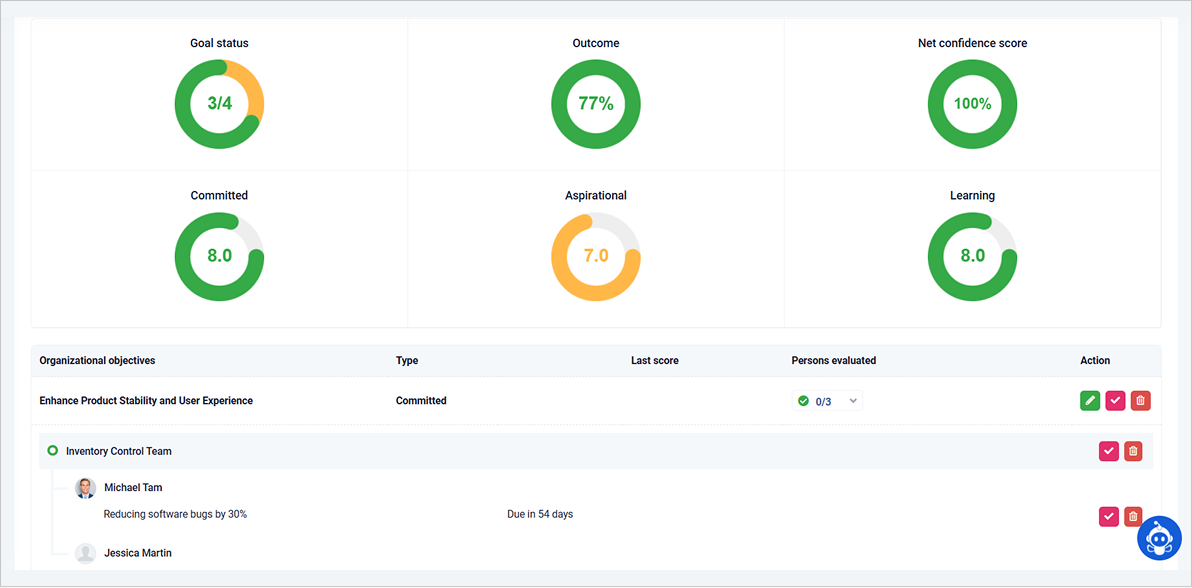
Implementing EOS effectively requires tools that seamlessly support its core components. AssessTEAM is purpose-built to offer exactly this simplicity and functionality within the realm of enterprise performance management software:
 Goal Setting and Rocks Management:
With its robust OKR (Objectives and Key Results) module, AssessTEAM empowers your teams to clearly define and easily track quarterly Rocks, staying aligned and focused on what matters most.
 Scorecard and KPI Tracking: AssessTEAM’s real-time dashboards and intuitive KPI analytics support EOS’s weekly Scorecard reviews, helping teams instantly identify trends and address performance gaps before they escalate.
 Accountability and Role Clarity:Role-based KPI management ensures every team member knows their responsibilities, directly aligning with EOS’s emphasis on accountability and transparency across your organization.
 Continuous Feedback and Employee Engagement:
With built-in tools for regular check-ins, comprehensive 360-degree feedback, employee surveys, and structured Manager 1:1 meetings, AssessTEAM supports EOS’s structured feedback loops, creating a culture of continuous improvement and engaged teams.
 AI-Based KPIs:
AssessTEAM integrates artificial intelligence-driven KPIs, allowing organizations to proactively predict performance trends, enhance strategic decision-making, and adapt swiftly to market or operational changes, aligning seamlessly with EOS principles.
Case Studies: EOS in Action
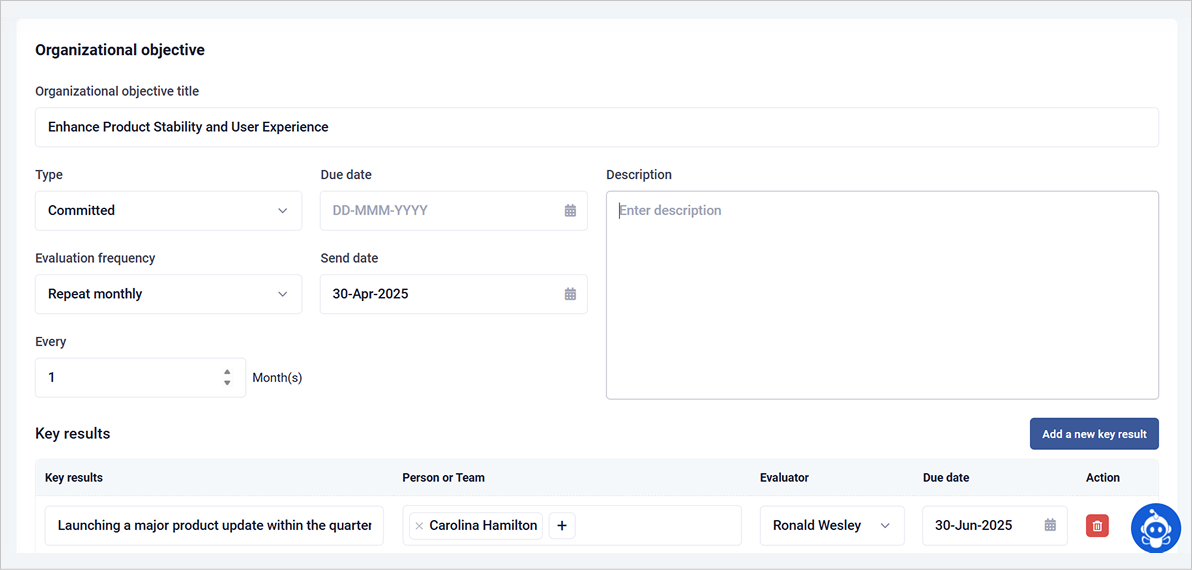
Software Company Example: A mid-sized software development firm implemented EOS using AssessTEAM to clarify team goals and boost productivity.
Quarterly Rocks included:
- Launching a major product update within the quarter.
- Reducing software bugs by 30%.
- Increasing user onboarding efficiency by enhancing online documentation.
Results:
- Clear visibility into progress, resulting in a 25% faster product release.
- Improved customer satisfaction due to reduced issues and clearer guidance.
- Enhanced team accountability and overall productivity.
Manufacturing Company Example:
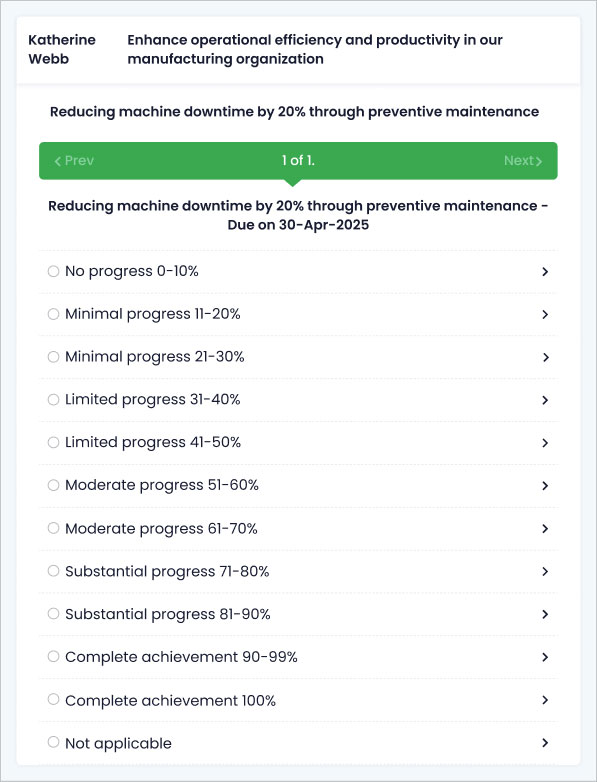
A medium-sized manufacturing firm leveraged AssessTEAM and EOS to streamline operations and improve efficiency.
Quarterly Rocks included:
- doneReducing machine downtime by 20% through preventive maintenance.
- doneImplementing a new inventory management system.
- doneTraining 100% of floor supervisors in lean manufacturing principles.
Results:
- doneOperational downtime reduced significantly, increasing production output by 15%.
- doneInventory accuracy improved drastically, reducing waste and lowering costs.
- doneSupervisors became more proactive, enhancing overall efficiency and communication across the production floor.
Integrating Complementary Tools
While AssessTEAM expertly handles the essentials of EOS, some specialized activities, like managing EOS Level 10 meetings, handling IDS (Identify, Discuss, Solve) issue management, or detailed process documentation, might still benefit from dedicated external tools. This flexibility allows businesses to choose the best-in-class tools that complement AssessTEAM perfectly.
Conclusion
Combining EOS’s powerful framework with AssessTEAM’s streamlined platform ensures your organization can effortlessly embrace best practices for performance management, accountability, and strategic goal achievement. By integrating EOS and AssessTEAM, startups and established businesses alike can accelerate their journey toward enhanced operational efficiency and sustained growth.
Ready to simplify your EOS journey? Try AssessTEAM today.